Virtual Try-On for Online Shopping: How It Works and Why It Changes Everything
Discover how virtual try-on technology works for online shopping, from AI-powered fitting to photorealistic visualization, and how it solves the biggest problem in e-commerce.
Online shopping for clothes should be effortless. You browse, you click, you buy. But there is one problem that haunts every fashion e-commerce platform: you cannot try before you buy.
The result? A staggering 30–40% return rate in fashion e-commerce, with "doesn't fit" or "looks different than expected" topping the list. Virtual try-on technology is here to change that. In this article, we will break down exactly how virtual try-on for online shopping works, what technology powers it, and why it is becoming a must-have feature for anyone who shops for clothes online.
What Is Virtual Try-On?
Virtual try-on is a technology that lets you see how a piece of clothing would look on your body without physically wearing it. Using your photo or a digital avatar, the system overlays garments onto your image, giving you a realistic preview of fit, drape, and style.
Unlike simple photo filters or basic overlays, modern AI-powered virtual try-on accounts for:
- Body shape and proportions — the garment adjusts to your silhouette
- Fabric physics — how the material folds, stretches, and hangs
- Lighting and shadows — realistic rendering that matches the environment
- Pose and angle — maintaining consistency whether you are standing straight or at an angle
This is not science fiction. It is live technology that major retailers and innovative fashion apps are deploying right now.
How Virtual Try-On Technology Works
Understanding how virtual try-on works helps you appreciate why some implementations feel magical while others fall flat. Here is the step-by-step process:
1. Image Capture or Upload
You provide a photo of yourself. The best systems work with a single full-body photo taken in good lighting. Some advanced platforms can even generate a try-on from your height, weight, and body shape description.
2. Body Analysis and Segmentation
AI models analyze your photo to identify key body landmarks: shoulders, waist, hips, arms, and legs. This segmentation map tells the system where your body is and where the garment should go.
3. Garment Understanding
The clothing item is analyzed separately. The AI extracts the garment's shape, texture, pattern, and how it is supposed to fit. A dress and a t-shirt have very different draping behaviors, and the system knows the difference.
4. Warping and Overlay
Here is where the magic happens. The garment is digitally "warped" to match your body pose and shape. Advanced diffusion models and neural networks generate photorealistic results that look like you are actually wearing the item.
5. Refinement and Output
The final image is refined for lighting consistency, shadow accuracy, and edge blending. The result is a photo that looks natural — not a crude cut-and-paste job.
Photorealistic Try-On vs. Stylized Fashion AI Images
Not all virtual try-on experiences are created equal. There are two main approaches:
| Feature | Photorealistic Try-On | Stylized Fashion AI |
|---|---|---|
| Goal | Show exactly how the item looks on YOU | Generate artistic or aspirational fashion imagery |
| Input | Your personal photo | Text prompts or generic models |
| Output | Realistic image of you in the garment | Artistic or catalog-style images |
| Use case | Making purchase decisions | Social media, inspiration, mood boards |
| Accuracy | High — focuses on fit and realism | Lower — prioritizes aesthetics over accuracy |
For online shopping, photorealistic try-on wins every time. When you are deciding whether to buy a $120 blazer, you want to know how it looks on your body, not on a generic AI-generated model.
Why Virtual Try-On Solves the Biggest Problem in Fashion E-Commerce
The numbers tell a clear story:
- 30–40% of online fashion purchases are returned
- 70% of returns are due to fit or appearance issues
- Each return costs retailers $15–30 in processing, shipping, and restocking
- Customers who experience a poor fit are less likely to shop again at that store
Virtual try-on attacks this problem at the root. When shoppers can see how clothes look on them before buying, they make better decisions. Returns drop. Customer confidence rises. Shopping becomes fun again instead of a gamble.
Benefits for Shoppers
- Fewer surprises — know exactly what you are getting
- Save time — no more ordering three sizes and returning two
- Shop with confidence — buy items you might have hesitated on
- Discover new styles — try bold pieces without commitment
Benefits for Retailers
- Lower return rates — by 20–50% in some implementations
- Higher conversion — customers who use try-on are more likely to buy
- Better customer data — understand what styles resonate
- Competitive advantage — differentiate from stores without try-on
How to Get Better AI Try-On Results with Your Photos
The quality of your virtual try-on depends heavily on the photo you provide. Here are practical tips to get the best results:
Lighting Matters
Use natural, even lighting. Avoid harsh shadows or backlighting that obscures your body shape. A well-lit photo gives the AI the cleanest data to work with.
Wear Fitted Clothing in Your Base Photo
When uploading a photo for try-on, wear something form-fitting. Baggy clothes make it harder for the AI to determine your actual body shape, which affects how garments are overlaid.
Full-Body, Front-Facing Pose
Stand straight, face the camera, and include your full body in the frame. Angled or cropped photos reduce accuracy because the AI has less information to work with.
Use a Plain Background
Busy backgrounds can confuse segmentation algorithms. A clean wall or simple backdrop helps the AI focus on what matters: you.
Choose High Resolution
Blurry or low-resolution photos lose detail. The AI needs clear edges and textures to generate convincing results.
The Future of Virtual Try-On
The technology is evolving rapidly. Here is what is coming next:
- Real-time video try-on — see how clothes move as you move
- Multi-garment layering — try on complete outfits, not just single items
- Size recommendation integration — AI suggests your perfect size based on your photo
- Social features — share try-on images with friends for feedback
- Cross-platform availability — try on clothes from any retailer in one app
As diffusion models and neural rendering improve, the gap between virtual and physical try-on will continue to shrink.
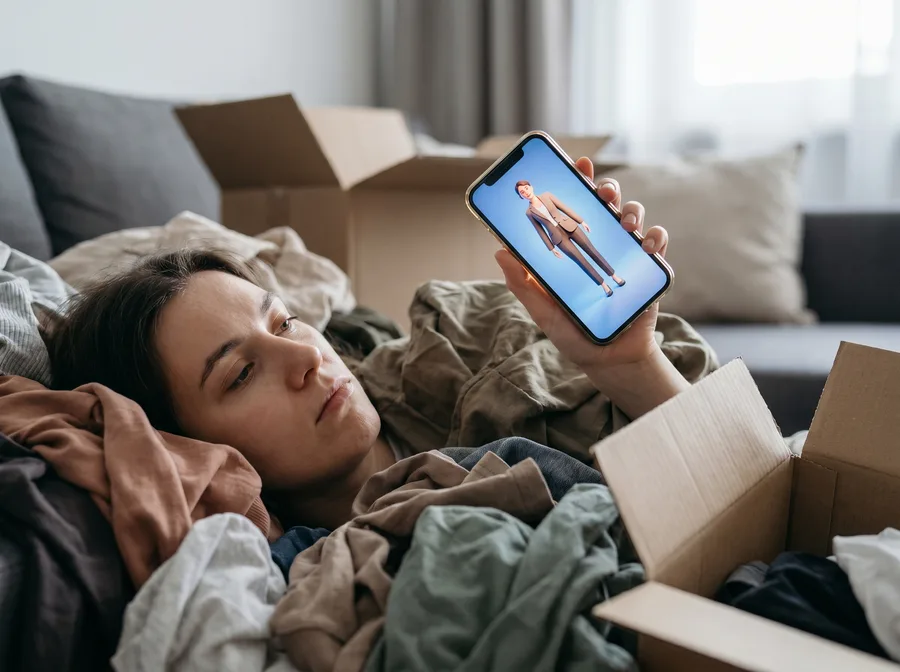
Try Virtual Try-On Yourself with fAIshion
At fAIshion, we believe shopping for clothes should feel as good as wearing them. Our AI-powered virtual try-on lets you upload your photo and see how outfits look on you in seconds — not minutes, not hours.
Whether you are building a capsule wardrobe, shopping for a special occasion, or just exploring new styles, fAIshion's virtual try-on helps you buy with confidence.
Ready to see how it works? Try fAIshion's AI stylist today and experience the future of online fashion shopping.
Have questions about virtual try-on technology? Drop us a message or explore more of our guides on AI-powered fashion tools.